If you’re reading this, you’ve probably already tried a lot of things. Products that worked for someone else. Advice from the internet. Maybe a facial somewhere that left your skin worse than when you walked in.
I’ve been a licensed esthetician for over 25 years, and here’s how I work: I don’t put you on a treatment table and start immediately. We talk first. I look at your skin. I tell you what I actually think is realistic — and then we build from there.
Serving Canton, Plymouth, Westland, Northville and the surrounding Wayne County area.
What happens on your first visit
When a new client comes in, I don’t want to immediately put them on a treatment table and start working on their skin. The first visit is about getting to know the person behind the skin.
We start with a consultation. I ask about your current skincare routine, the products you’re using, medications or prescriptions that may affect your skin, how long you’ve been dealing with your concerns, and what you’ve already tried. I also want to understand your lifestyle — stress, hormones, diet, sleep, work environment, and how you care for your skin at home all play a role.
Then I look closely at the skin myself. I assess oil production, dehydration, sensitivity, congestion, inflammation, breakouts, pigmentation, texture, and the overall condition of your skin barrier.
Then I explain what I see — and, most importantly, what I think is realistic to accomplish. I don’t believe in automatically doing the most aggressive treatment. Sometimes the best first step is calming and strengthening the skin before we start doing more corrective work.
Then we build a plan. Based on your skin, your goals, and how your skin is responding that day. I’ll also explain what I recommend for home care, because professional treatments are only part of the process. What you do between appointments makes a tremendous difference.
My goal after that first visit is for you to leave understanding what’s happening with your skin, why we’re treating it the way we are, and what you can realistically expect.
Not all acne is the same
Not every breakout is the same, and I don’t believe every client should get the same acne treatment. Over the years, I see a few patterns again and again.
Congested, clogged skin
Blackheads, whiteheads, small bumps, and congestion — usually around the nose, chin, forehead, or jawline. The goal is to gently improve congestion without over-drying or irritating the skin. Depending on the condition of your skin, that may include professional exfoliation, appropriate extractions, hydration, and a simple home-care routine.
Inflamed breakouts
More redness, swelling, and tender pimples. With inflamed skin I’m much more cautious. The goal isn’t to aggressively extract everything or strip the skin — it’s to reduce irritation, support the skin barrier, and choose treatments your skin can actually tolerate.
Hormonal-pattern breakouts
Breakouts that consistently appear along the jawline, chin, or lower face, or that fluctuate with hormonal changes. Here I look at the bigger picture rather than treating each individual breakout. We talk through patterns, skincare, and lifestyle, and whether it makes sense to involve a medical professional. Estheticians support the skin — we don’t diagnose or treat hormonal conditions.
Acne-prone skin with lingering marks and texture
Sometimes the active breakouts aren’t the main concern. You may have few new pimples but be left with redness, dark marks, uneven texture, or changes from previous breakouts. Once the skin is stable enough, we can gradually shift toward improving those while still preventing new congestion.
I don’t treat a diagnosis on paper. I treat the skin that’s actually in front of me. Two people can both say they have “acne” and need completely different approaches.
The Acne Facial
$149 · from 30–60 minutes
Every acne facial starts from the same foundation and is adjusted to what your skin needs that day. Depending on how much congestion we’re working through and how much customization your skin calls for, appointments generally run between 20 and 60 minutes.
Included in every acne facial
- Skin consultation and assessment
- Double cleanse
- Skin analysis
- Gentle exfoliation appropriate for your skin
- Steam or another softening method when indicated
- Extractions when appropriate
- A targeted acne treatment or mask
- High-frequency or another acne-focused modality when appropriate
- Hydrating and soothing finishing products
- Moisturizer
- SPF
- Basic home-care recommendations
Added when your skin calls for it
- More extensive extractions
- Enzyme treatment
- A specialized acne mask
- High frequency
- LED
- A calming, hydrating treatment if your skin barrier is irritated
- More targeted work on congestion, inflammation, or post-acne marks
Not every acne facial includes every one of these. That’s intentional — treatment is adjusted to the condition your skin is actually in that day, and using every modality on every client isn’t how good results happen.
How often should you come in?
A reasonable starting point is every 2 to 4 weeks, depending on the severity of your acne and how your skin responds. If you have active congestion, you may benefit from more consistent visits at first, followed by maintenance appointments once your skin has settled.
What to Expect After Your Acne Facial
Your skin may look a little pink or feel slightly sensitive immediately after your acne facial, especially if extractions were performed. This is normal and typically settles within a few hours.
For the first 24–48 hours, keep your skincare routine simple and gentle. Avoid picking or touching your skin, exfoliating products, scrubs, retinoids, and other strong active ingredients unless specifically recommended. Avoid excessive heat, including hot tubs, saunas, and very hot showers, and be mindful of prolonged sun exposure.
Keep your skin hydrated with a gentle moisturizer and apply sunscreen during the day. Your skin is going through a treatment and recovery process, so giving it time to calm down is an important part of getting the best results.
You may notice some temporary dryness or minor congestion coming to the surface after treatment. This does not necessarily mean your skin is reacting badly — it can be part of the normal adjustment process.
Most importantly, don’t pick or squeeze your skin after your facial. Allow your skin to heal naturally and follow the home-care recommendations provided during your appointment.
If you experience anything unusual or have concerns about how your skin is responding, contact us so we can help you determine the best next step.
Real Results
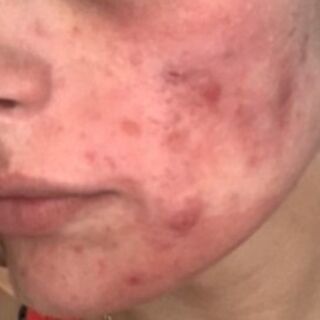
Before
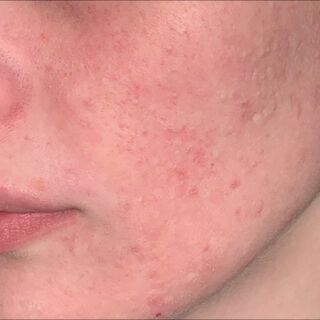
After 3 weeks
These photos are from one of our clients, shared with her permission, after three weeks of treatment and home care. Every person’s skin is different and individual results vary.
Frequently Asked Questions
How often should I get an acne facial?
A reasonable starting point is every 2 to 4 weeks, depending on the severity of your acne and how your skin responds. If you have active congestion, you may benefit from more consistent visits at first, followed by maintenance appointments.
Will you extract my pimples?
Extractions are part of the treatment when they’re appropriate — but not always, and not aggressively. With inflamed or irritated skin, extracting everything can cause more harm than good. Your esthetician will assess your skin that day and explain what she recommends before beginning.
Will my skin break out afterward?
You may notice some temporary dryness or minor congestion coming to the surface after treatment. This doesn’t necessarily mean your skin is reacting badly — it can be part of the normal adjustment process as your skin settles.
How long does redness last?
Your skin may look a little pink or feel slightly sensitive right after your facial, especially if extractions were performed. For most clients that settles within a few hours. If we’ve done a more corrective treatment or worked more extensively on congestion, it may last longer — and that’s something we’ll explain before we begin, not after.
What should I avoid after my facial?
For the first 24–48 hours, keep things simple. Avoid picking or touching your skin, exfoliating products, scrubs, retinoids, and other strong actives unless we’ve specifically recommended them. Avoid excessive heat — hot tubs, saunas, and very hot showers — and be mindful of prolonged sun exposure. Use a gentle moisturizer and wear sunscreen during the day.
Can I get an acne facial if I have sensitive skin?
Yes, and it’s one of the reasons we start with a consultation rather than a treatment. With sensitive or inflamed skin we take a much more cautious approach — the goal is to reduce irritation and support your skin barrier, not to strip it. Sometimes the best first step is calming and strengthening your skin before doing anything more corrective.
What’s the difference between an acne facial and a regular facial?
An acne facial is built around congestion, breakouts, and the condition of your skin barrier — the exfoliation, extractions, treatment mask and finishing products are all chosen with that in mind. A general facial is focused more on cleansing, hydration and relaxation. If you’re after general relaxation, hydration, or one of our non-acne treatments like the Extra Strong Peel, IPL, or NIR Skin Tightening, take a look at our Facials & Skin Treatments page instead.
Do you treat hormonal acne?
We can support your skin, and we often do. But if your breakouts consistently appear along the jawline, chin, or lower face, or fluctuate with hormonal changes, we look at the bigger picture rather than treating each individual breakout — and we’ll talk about whether it makes sense to involve a medical professional. Estheticians support the skin; we don’t diagnose or treat hormonal conditions.
Acne treatment is built around your skin at your consultation. Book a consultation and we’ll go over what your skin actually needs and what it will cost.
Book a consultation
Treatments are performed by a licensed esthetician with over 25 years of experience.
New Face New Body
5844 N Sheldon Rd, Canton, MI 48187
(734) 799-3196